

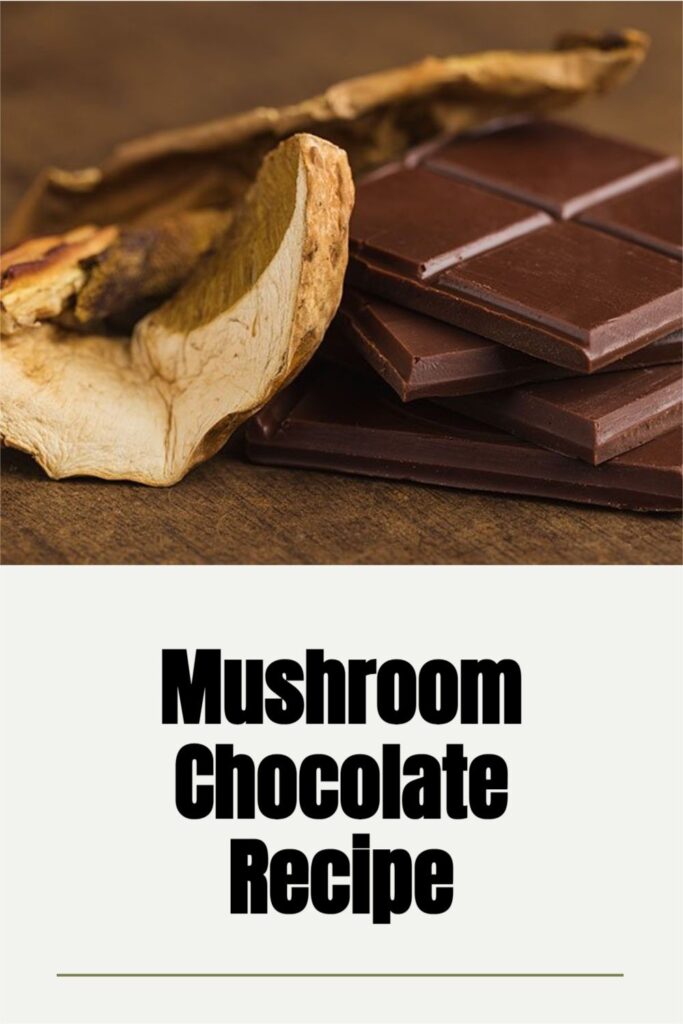
Reishi mushroom chocolate combines cacao with one of the best-known functional mushrooms in traditional East Asian medicine. Reishi is commonly associated with the genus Ganoderma, a group of fungi that contains polysaccharides, triterpenes, sterols, and other naturally occurring compounds that have been investigated by researchers.
Reishi has a long history of traditional use, particularly in Chinese and Japanese medicine. Modern research has focused on its chemical composition, biological activity, safety, and potential effects on different aspects of human health.
However, it is important to distinguish traditional use and laboratory research from established clinical benefits. Human studies of Ganoderma products remain limited, and results can vary according to species, extraction method, dose, and product composition.
What Are Reishi Mushrooms?
Reishi is a common name used for several species of Ganoderma. In traditional Chinese medicine, the mushroom is commonly known as Lingzhi.
The scientific naming of reishi can be confusing because products have historically been labeled Ganoderma lucidum even when the material belongs to other closely related species. Molecular and morphological research has identified substantial diversity within the G. lucidum complex. A 2015 phylogenetic study identified 13 species within the complex, including Ganoderma lingzhi, G. lucidum, G. tsugae, and several other species.
This distinction matters when discussing research because different Ganoderma species can have different chemical profiles.
Why Is Reishi Called the Mushroom of Immortality?
Reishi has accumulated a number of traditional names, including “mushroom of immortality” and Lingzhi.
These names reflect its historical importance in East Asian traditional medicine rather than modern clinical evidence that reishi extends human lifespan.
Historical use of Ganoderma species spans more than two millennia, and the mushrooms have been used in traditional preparations for a variety of purposes. Modern scientific research is now examining the compounds responsible for many of the biological activities observed in laboratory and experimental studies.
It is therefore useful to separate three concepts:
- Traditional use
- Preclinical laboratory research
- Human clinical evidence
These categories are not interchangeable.
Where Do Reishi Mushrooms Grow?
Ganoderma species occur in many parts of the world.
Reishi-type mushrooms commonly grow as shelf-like fruiting bodies on wood, including dying or fallen trees. Depending on the species, habitat can range from tropical and subtropical environments to temperate forests.
Commercial reishi is generally cultivated rather than harvested from the wild. Cultivation can take place on logs or controlled substrates such as sawdust.
The growing substrate, species, cultivation conditions, harvesting time, and extraction method can all influence the final composition of a reishi product.
What Compounds Are Found in Reishi?
One reason reishi has attracted scientific interest is its diverse chemical composition.
Research has identified numerous compounds in the Ganoderma genus, including polysaccharides, triterpenoids, sterols, proteins, nucleosides, and other secondary metabolites. A major review identified hundreds of secondary metabolites across Ganoderma species, including numerous terpenoids and steroids.
Two major groups frequently discussed in reishi research are:
Beta-Glucans and Other Polysaccharides
Reishi contains polysaccharides, including beta-glucan structures.
Fungal beta-glucans have been studied extensively because of their interactions with the immune system and other biological pathways. A systematic review of randomized controlled trials involving fungal beta-glucans found that studies using Ganoderma lucidum and other mushrooms investigated immune and wellbeing-related outcomes, although results were not uniform across studies.
The amount and composition of beta-glucans can vary considerably between mushroom products.
Triterpenes and Ganoderic Acids
Reishi is also known for its triterpenes, including ganoderic and related acids.
These compounds contribute to the characteristic bitter taste associated with many reishi preparations. Research comparing commercial Ganoderma strains has demonstrated differences in triterpenic-acid profiles between G. lucidum and G. lingzhi.
This is one reason a strongly bitter reishi extract should not automatically be interpreted as a sign of poor quality. The bitterness can be part of the mushroom’s natural chemical profile.
Why Does Reishi Taste Bitter?
Reishi is naturally much more bitter than culinary mushrooms such as shiitake or oyster mushrooms.
Triterpenic compounds, including ganoderic acids, contribute to this distinctive bitterness. Research comparing Ganoderma species has specifically linked higher triterpenic-acid content with stronger bitterness in some samples.
When reishi is combined with cacao, the bitterness can be balanced by the naturally roasted, earthy, and sometimes fruity characteristics of chocolate.
This makes reishi chocolate an interesting format for people who want to incorporate mushroom ingredients into a food rather than consuming a concentrated mushroom preparation by itself.
Reishi Mushroom Chocolate
Reishi mushroom chocolate combines cacao with reishi mushroom material or extract.
The cacao contributes its own naturally occurring compounds, including cocoa flavanols and methylxanthines, while the reishi component contributes compounds associated with Ganoderma.
The resulting product is different from conventional chocolate because it combines two botanically and chemically distinct ingredients.
When evaluating a reishi chocolate product, useful information to look for includes:
- The Ganoderma species used
- Whether the product contains fruiting body, mycelium, or an extract
- The extraction method
- Standardization information where available
- Beta-glucan information
- Ingredient transparency
- Third-party testing where available
- Serving size
Reishi Fruiting Body vs. Reishi Extract
Fruiting body and extract are not interchangeable terms.
A whole reishi fruiting body contains the mushroom’s naturally occurring compounds in their original matrix. An extract has undergone additional processing intended to concentrate or make certain compounds more available.
Different extraction methods can emphasize different groups of compounds.
For example, water extraction is commonly used to obtain polysaccharide-rich fractions, while alcohol-based extraction can be used to extract certain triterpenoid compounds.
Consequently, two products that both say “reishi” on the label may have substantially different chemical profiles.
Reishi and Stress Research
Reishi is frequently marketed for relaxation and stress support.
There is biological and preclinical research investigating compounds from Ganoderma, but evidence from human clinical trials is much less definitive.
A comprehensive review of G. lucidum research noted potential pharmacological activity across numerous areas but also emphasized that much of the evidence remains preclinical and that additional high-quality clinical research is needed.
A 2025 systematic review and meta-analysis examined 17 randomized controlled trials involving 971 participants. Although some outcomes showed statistically significant changes, the authors rated the overall certainty of evidence as very low and noted substantial variation according to dose, duration, age, and health status.
For that reason, it is more accurate to say that reishi is being researched for potential effects related to stress and wellbeing than to describe it as a proven stress treatment.
Reishi and Sleep
Reishi is traditionally associated with nighttime use and relaxation, which has contributed to its popularity in nighttime beverages and chocolate products.
However, traditional use should not be confused with established clinical efficacy.
Research into Ganoderma and sleep-related outcomes is still developing, and human evidence does not currently justify treating reishi chocolate as a medical treatment for insomnia or other sleep disorders.
For consumers interested in reishi nighttime chocolate, the product can instead be viewed as a food format that combines cacao with a traditionally used mushroom ingredient.
Reishi and Antioxidant Research
Reishi contains several classes of compounds that have demonstrated antioxidant activity in laboratory research.
Polysaccharides, phenolic compounds, triterpenes, and other constituents have all been investigated for their biological activity.
However, laboratory antioxidant activity does not automatically translate into a measurable clinical benefit in humans.
This distinction is particularly important when evaluating mushroom chocolate marketing claims. A compound demonstrating antioxidant activity in a test tube is not the same as proving that a chocolate product prevents disease or improves a particular health condition.
Why Mushroom Species Matter
The word “reishi” can hide important differences between products.
Modern molecular research has shown that the Ganoderma lucidum complex contains multiple species. The 2015 global phylogenetic analysis identified 13 species in the complex and demonstrated that they form several distinct evolutionary lineages.
Another study comparing commercially cultivated G. lucidum and G. lingzhi found differences in their triterpenic-acid profiles, illustrating why accurate identification can matter when interpreting research and evaluating commercial mushroom products.
For manufacturers and consumers, species identification can therefore be more informative than simply using the generic word “reishi.”
Reishi Chocolate vs. Other Mushroom Chocolate Bars
Reishi chocolate is one category within the broader mushroom chocolate market.
Mushroom chocolate bars can contain many different fungi, including reishi, lion’s mane, cordyceps, chaga, or mixtures of several mushroom ingredients.
The term magic mushroom chocolate bars, however, can refer to products containing psychoactive mushrooms or substances marketed as psychedelic mushrooms. These products are fundamentally different from a conventional reishi chocolate containing Ganoderma.
Likewise, products marketed under names such as PolkaDot mushroom chocolate bar can have formulations that differ from ordinary functional mushroom chocolate. Consumers should examine the actual ingredient list, manufacturer information, laboratory testing, and applicable laws rather than assuming that products with similar names contain the same ingredients.
Reishi chocolate should therefore be evaluated according to its actual formulation rather than by the broader “mushroom chocolate” category.
What to Look for in a Quality Reishi Chocolate
If you are choosing a reishi mushroom chocolate, transparency is one of the most useful factors to consider.
Look for a product that clearly identifies:
1. The Mushroom Species
A manufacturer should ideally disclose the scientific name of the Ganoderma species used.
2. The Mushroom Material
Check whether the product contains fruiting body, mycelium, extract, or a combination.
3. The Extraction Method
Extraction can influence which compounds are concentrated in the final ingredient.
4. Ingredient Information
Look for a complete ingredient list rather than relying solely on front-of-package terms such as “functional mushroom.”
5. Testing Information
Where available, third-party testing can provide additional information about identity, purity, contaminants, and product composition.
Reishi Mushroom Chocolate and Moksha Chocolate
Reishi mushroom Chocolate describes its nighttime chocolate as combining reishi fruiting body and reishi extract with cacao.
From a formulation perspective, combining whole mushroom material with an extract can provide a broader representation of the mushroom’s constituents than relying on one preparation alone. However, the actual nutritional and chemical profile depends on the quantities and processing methods used.
The characteristic bitterness of reishi can also contribute an earthy layer to cacao’s naturally complex flavor.
This makes reishi chocolate particularly suited to people who enjoy darker, less-sweet chocolate profiles and want a mushroom ingredient incorporated into a food format.
Frequently Asked Questions About Reishi Mushroom Chocolate
What is reishi mushroom chocolate?
Reishi mushroom chocolate is chocolate formulated with reishi or Ganoderma mushroom ingredients. Depending on the product, it may contain whole fruiting body, mushroom extract, or both.
Is reishi the same as Ganoderma lucidum?
Not necessarily. Reishi is a common name used for several Ganoderma species. Scientific research has demonstrated considerable diversity within the G. lucidum complex, including G. lingzhi and other species.
Why is reishi mushroom bitter?
Reishi’s characteristic bitterness is associated in part with triterpenic compounds, including ganoderic acids. Different Ganoderma species and preparations can have different triterpene profiles.
What are the main compounds in reishi?
Research has identified polysaccharides, beta-glucans, triterpenoids, sterols, proteins, nucleosides, and numerous other compounds across Ganoderma species.
Is reishi scientifically proven to reduce stress?
Human research remains limited and mixed. A 2025 systematic review of randomized controlled trials concluded that the certainty of evidence for the health effects studied was very low.
What is the difference between reishi extract and fruiting body?
A fruiting-body ingredient uses the mushroom’s reproductive structure, while an extract has been processed to concentrate or extract particular compounds. Their chemical profiles can therefore differ.
Is reishi chocolate the same as magic mushroom chocolate?
No. Reishi belongs to the Ganoderma group of fungi and is not a psychedelic mushroom. Products marketed as magic mushroom chocolate bars may contain entirely different ingredients and should be evaluated separately.
Final Thoughts
Reishi mushrooms have a long history of traditional use and remain an active area of modern mushroom research.
Their polysaccharides, beta-glucans, triterpenoids, and other compounds have attracted scientific interest, while research continues to investigate how different Ganoderma species and preparations interact with the human body.
For chocolate makers, reishi offers another way to combine the earthy complexity of functional mushrooms with the flavor and texture of cacao. For consumers, the most useful approach is to look beyond broad marketing claims and examine the mushroom species, extraction method, ingredients, serving information, and available testing.
Reishi chocolate can be an interesting functional-food format, but current clinical evidence should be interpreted cautiously rather than treating traditional claims or laboratory findings as established medical benefits.Research note: This article is for educational purposes and is not intended to diagnose, treat, cure, or prevent any disease. Individual products can differ substantially in species, extraction method, concentration, and ingredients.